Lately, the whole game around 3D printed injection molds has really been shaking up how things are made. I read somewhere that Market Research Future says the global 3D printing scene's expected to grow at about 21% annually until 2026 — that’s pretty huge! This shift hints at a move away from traditional mold making and towards more innovative, tech-savvy methods. Honestly, these 3D printed molds are pretty awesome because they can help speed things up and cut costs at the same time.
What’s really cool is how fast these molds can be made — much quicker than the old-school ways. Companies like Formlabs say you can have a mold ready in just a few days. That’s a game-changer because it means businesses can test out new designs way faster, giving them a real leg up over competitors. But, to be honest, moving into 3D printing isn’t all smooth sailing. There are some tricky bits, like making sure the quality stays top-notch and picking the right materials.
The key thing is consistency — you want your final products to come out just right each time. Some manufacturers still bump into issues with durability when they compare these new molds to traditional ones. Learning from industry leaders like GE Additive can really help figure out how to handle these hurdles. Bottom line? Jumping into 3D printed Injection Molds can really boost efficiency, but you’ve gotta weigh the pros and cons and stay aware of potential pitfalls.
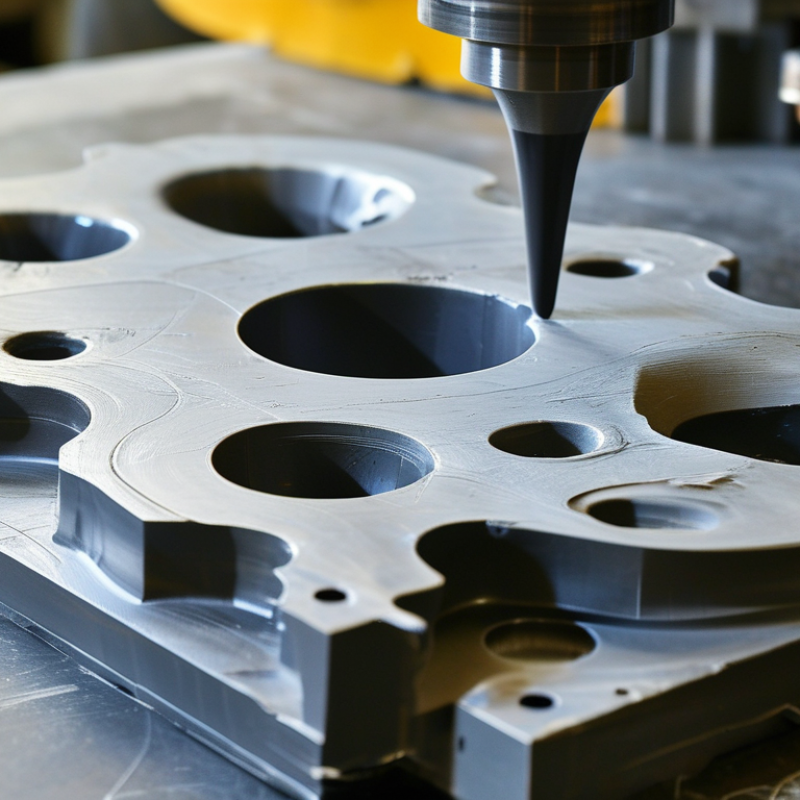
Benefits of 3D Printed Injection Molds for Cost Efficiency
3D printed injection molds revolutionize manufacturing. They offer unmatched cost efficiency for buyers. Traditional molds can be expensive and time-consuming to produce. 3D printing shortens lead times and reduces costs significantly. It allows for rapid prototyping, leading to faster product development cycles. Buyers can test designs without heavy financial investment.
Buying 3D printed molds can reduce waste. They produce only what is necessary. This minimal material usage can save money. Additionally, the flexibility in design helps create intricate shapes. Complex geometries that are difficult with traditional methods become easier and cheaper. Buyers can explore unique designs without breaking the bank.
Consider the material choices when selecting molds. Different materials can affect durability and cost. It's essential to evaluate specific project requirements. A thorough assessment of your needs is crucial. Look for suppliers with expertise in 3D printing. Their knowledge can guide you in making informed decisions. Failing to do so might lead to future challenges. 3D printed molds are a fantastic option, but they require careful planning and execution.
Enhanced Design Flexibility Offered by 3D Printing Technology
3D printing technology has revolutionized the manufacturing landscape, particularly in the creation of Injection Molds. One notable advantage is the enhanced design flexibility it provides. Traditional methods often restrict design options due to manufacturing limitations. However, 3D printing allows for complex geometries. According to a report by Wohlers Associates, 3D printing can cut mold production time by up to 70%. This efficiency enables quicker iterations and refinements in design.
Furthermore, 3D-printed injection molds can incorporate intricate internal features. These features may include cooling channels that optimize temperature control during the injection process. A study published in the Journal of Manufacturing Processes highlights that molds designed with better cooling systems can improve cycle times by 50%. This leads to reduced energy consumption and faster production rates.
Despite these advancements, challenges remain. Not all materials suitable for traditional injection molding are available in 3D printing. Additionally, the surface finish of 3D-printed components may not always meet high-quality standards required for certain applications. Each project must consider these factors to fully leverage the benefits of 3D-printed injection molds.
Reduced Lead Times in Mold Production Using 3D Printing
The adoption of 3D printing in the production of Plastic Injection Molds has led to significant reductions in lead times. Industry reports indicate that using 3D printing can cut traditional mold production time by 50-75%. This is particularly beneficial for companies that require rapid prototyping or quick market entry. For instance, a recent study found that conventional methods could take weeks or even months, whereas 3D printed molds can often be completed in just a few days.
Moreover, 3D printing allows for complex geometries that traditional molding techniques struggle with. This flexibility leads to improved efficiency in production, as more intricate designs can be realized without extensive tooling changes. Research highlights that about 30% of molds produced using traditional methods encounter design limitations, whereas 3D printing mitigates these challenges. However, there are still considerations to address, such as material durability and the intricacies of design validation.
Simultaneously, costs may fluctuate based on the intricacies of the design. Companies must evaluate the trade-offs between speed and material strength. While the speed of delivery is undeniably appealing, the long-term viability of the printed molds needs to be assessed. In an evolving market, organizations face a balancing act to optimize production time without compromising quality in their plastic injection molds.
Improved Material Utilization and Waste Reduction
3D printed injection molds are revolutionizing the manufacturing landscape, particularly in terms of material utilization and waste reduction. Traditional molding methods often result in significant excess material. For instance, conventional processes can lead to waste rates as high as 30%. In contrast, 3D printing enhances precision and optimizes the design, reducing material usage substantially. A recent report from the additive manufacturing sector indicates that companies can lower waste by up to 75% with effective 3D printed molds.
Efficiency isn't limited to the materials alone. According to industry experts, the rapid prototyping capabilities of 3D printing enable swift iterations, minimizing the risk of overproduction. In many cases, manufacturers can achieve a faster turnaround time without losing quality. This agility can be vital in competitive markets. Therefore, companies are encouraged to review their production pipelines. Consider how adopting 3D printed injection molds might enhance your efficiency while reducing waste.
For those invested in Plastic Mold Injection processes, analyzing mold designs through simulation tools can yield insights into material flow and potential waste points. Think about involving cross-functional teams in your evaluation. Communicating effectively across departments will help you address gaps in waste management updates. It’s worth reflecting on the total lifecycle of materials used and ensuring there's a plan in place to recycle or repurpose unused resources.
Customization Opportunities for Unique Product Requirements
3D printed injection molds offer unparalleled customization opportunities for unique product requirements. This technology allows for precise adjustments that traditional methods cannot easily achieve. You can create molds tailored to specific designs and functional needs. This flexibility opens up new avenues for innovation.
When pursuing 3D printed molds, consider performance and material choices. Different materials can impact the mold's durability and the final product's quality. You may need to experiment with various options to find the best fit. Not all materials will align with your vision or production needs.
Reflect on the speed of production as well. 3D printing can significantly reduce lead times. However, it's crucial to balance speed with quality assurance. Rapid prototyping can lead to less-than-perfect results if not monitored closely. Always be ready to iterate on your designs, as adjustments may be necessary to achieve optimal outcomes. Customization is a powerful tool, but it requires careful planning and a willingness to refine your approach.
Higher Accuracy and Precision in Mold Design with 3D Printing
3D printing technology has revolutionized the manufacturing of injection molds. One prominent advantage is the higher accuracy and precision achieved in mold design. Traditional methods often lead to tolerances that can be difficult to maintain. In contrast, 3D printing allows for intricate geometries that meet exact specifications. This results in molds that fit better, reducing the likelihood of defects during production.
Precision is paramount in Injection Molding. With 3D printed molds, designers can include complex features without extensive retooling. This capability enhances the product's overall quality. However, it also raises the question of dependency on digital processes. Designers must adapt, ensuring they fully understand 3D printing limitations. While accuracy improves, the need for expertise in this new approach is clear.
Moreover, the detailed feedback from digital simulations helps in refining product designs. This integration of technology into traditional manufacturing methods allows for constant improvement. Yet, the reliance on software can lead to oversights if not managed carefully. As professionals in the field embrace this shift, ongoing training and experience-sharing will be essential. The world of injection molding is changing, and adaptability will be key to harnessing these innovations effectively.
Long-term Savings through Lower Production Costs and Maintenance
The shift towards 3D printed injection molds offers significant long-term savings. Traditional methods require high upfront costs for tooling. In contrast, 3D printing reduces these expenses drastically. This shift allows buyers to spend less on initial production. As molds can be designed quickly, production can start sooner. This is crucial in fast-paced industries.
Maintaining 3D printed molds is often simpler. The materials used can withstand wear and tear effectively. Buyers benefit from lower maintenance costs compared to conventional molds. However, one should consider the durability of these molds. Not all 3D printed materials are created equal. Some may wear out faster than others. It's essential to evaluate the specific needs of your production process.
Testing the mold before full-scale production can offer insights. Small-scale runs help identify any potential issues early. Buyers should also remain flexible in their designs. Adapting to feedback and making modifications is key. Monitoring production efficiency after the switch is crucial for continuous improvement. Keep an eye on production timelines and costs to fully realize the benefits of this innovative approach.
FAQS
: 3D printing can reduce mold production time by 50-75%, allowing faster market entry.
It enables complex shapes that traditional methods struggle with, improving overall production efficiency.
Yes, considerations include material durability and design validation challenges that may arise.
Yes, they offer remarkable customization opportunities tailored to specific design and functional needs.
Different materials affect durability and quality; experimentation may be needed to find the right fit.
It's essential to balance speed with quality assurance to avoid less-than-perfect outcomes.
They significantly lower upfront tooling costs and maintenance expenses compared to traditional methods.
Testing can identify potential issues early and help refine designs based on feedback.
Flexibility and readiness to adapt designs are key for ongoing production efficiency and improvement.
Keeping track of production timelines and costs is vital for realizing the full benefits of the transition.
Conclusion
The use of 3D printed injection molds offers a multitude of advantages for buyers in the manufacturing sector. One of the key benefits is cost efficiency, as 3D printing significantly reduces production costs and lowers maintenance expenses over time. Additionally, the enhanced design flexibility provided by this technology allows for intricate mold designs that would be challenging with traditional methods.
Moreover, 3D printed injection molds enable reduced lead times, ensuring quicker turnaround for product development. They also promote improved material utilization, leading to less waste during the manufacturing process. Customization possibilities allow for tailored solutions to meet unique product requirements, while the higher accuracy and precision in mold design contribute to better end products. Collectively, these advantages make 3D printed injection molds an attractive option for businesses seeking to innovate and optimize their manufacturing processes.





 Phone
 Send Email
 Whatsapp

